
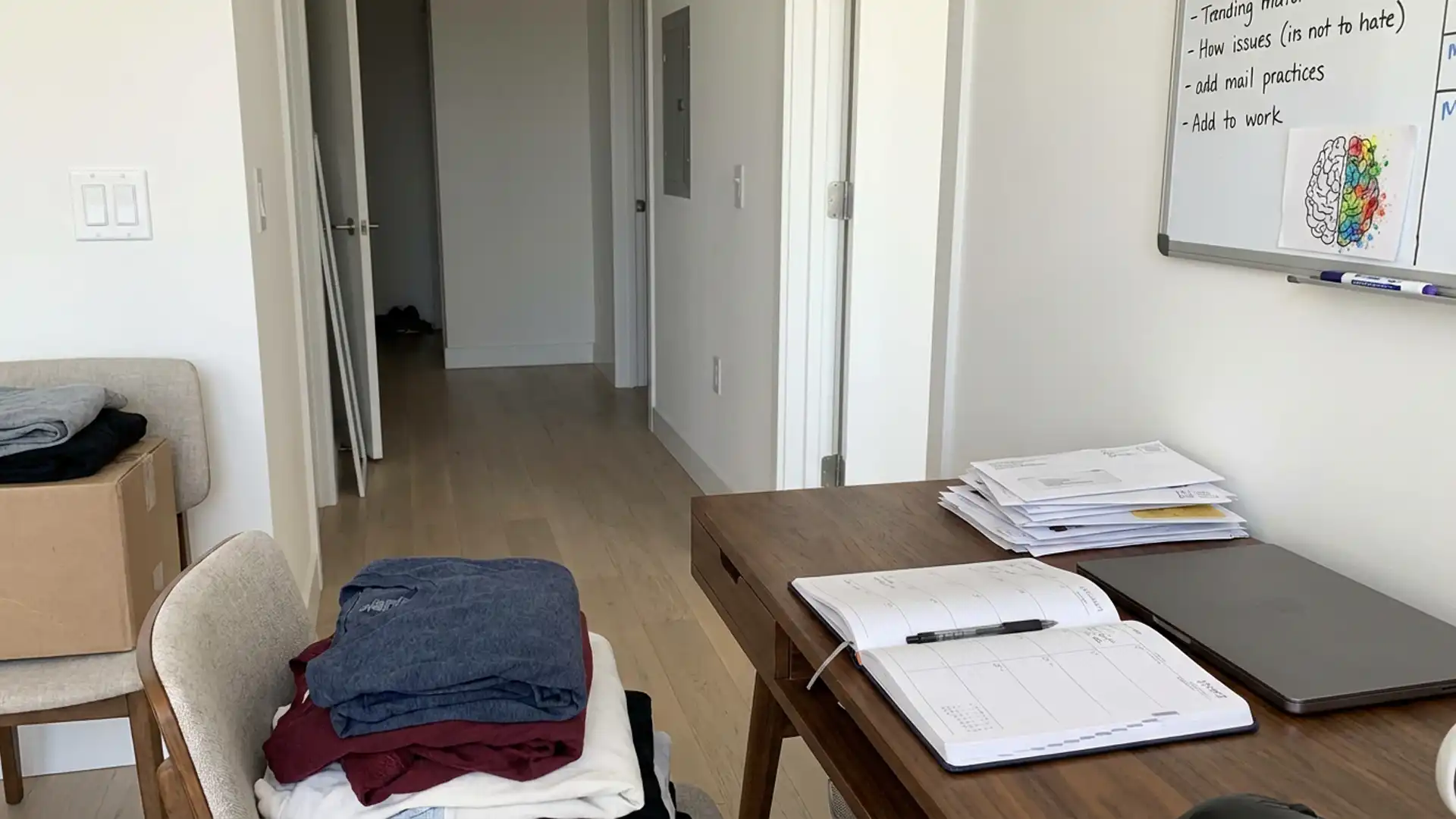
"If you know exactly what needs doing - and still can't make yourself start.
If you've been called lazy your whole life, when you know that isn't true.
Or if your brain is running at full speed while your home falls further behind every week."
There are two things you absolutely must know right now.
Says Dr. Emma Hartley, behavioral neuroscientist who has spent 18 years at the University of Cambridge researching why neurodivergent brains - ADHD, anxiety, chronic overthinking - struggle specifically with initiation and completion, even when motivation, intelligence, and genuine desire are all present.
"First: you are not lazy. Not even slightly. The word has never applied to you and it never will."
"What you have is a brain that requires a different kind of signal to begin a task than neurotypical brains do. That signal is not willpower. It is not motivation. It is not caring more. And the fact that you don't have it is not a character flaw."
"It is neuroscience."
"The second thing you need to know," Dr. Hartley continues, "is that this can change. Not by trying harder. Not by finally becoming the person you think you should be. By giving your brain the one specific thing it has always needed - and never been given."
The Harder You Push, The More Stuck You Get - And Science Now Knows Exactly Why
After 18 years of research, Dr. Hartley is certain of one thing:
"The neurodivergent brain does not respond to pressure. It responds to interest, urgency, challenge, and reward. When none of those are present - when the task is just a task - the brain produces no initiation signal. Not a weak signal. No signal."
"And when the person then tries to force the signal through willpower, the brain interprets the effort as a threat. The resistance increases. The task feels heavier. The shame grows."
"This is not weakness. It is the predictable behavior of a nervous system that was never designed to respond to pressure."
She paused.
"Most people with undiagnosed or late-diagnosed ADHD have spent decades trying to fix a signal problem with effort. The effort doesn't fix it. It makes it worse. Every time."
Here's How You Know If This Is What's Actually Happening To You
- You can spend an entire day intending to do one task - and still not have started it by evening
- You work brilliantly under deadline pressure but are completely paralyzed without it
- Your home is chaos, but you can organize someone else's home without difficulty
- You've been called intelligent by everyone who knows you - and lazy by everyone who lives with you
- You start things easily but finishing them feels like running through concrete
- You overthink the task until the thinking itself becomes the avoidance
- You feel genuine shame about the gap between who you know you are and what your home shows
- You've tried every system, every app, every method - and they all work for exactly two weeks
"This is the profile of a brain that has never been given the right tool," Dr. Hartley said. "Not a broken brain. Not a weak brain. A brain that needs a specific kind of signal - one that neurotypical productivity systems are entirely not designed to provide."

What The Neurodivergent Brain Actually Needs - And Why Every Traditional Method Misses It Completely
"Traditional productivity advice is built for the neurotypical brain," Dr. Hartley said.
"Make a list. Set a timer. Break it into steps. Just start."
"For the neurodivergent brain, this advice is not just unhelpful. It is actively harmful. Because when the person follows the advice and still can't start, they conclude that the problem is them. That they lack something the advice assumed they had."
"They don't lack anything. The advice lacked understanding of how their brain actually works."
What the neurodivergent brain responds to, Dr. Hartley's research found, is not instruction but momentum.
Not planning the task. Not breaking it down. Not setting timers.
A single, specific, extremely small action - small enough to require no decision, no motivation, no willpower - that gives the brain its first experience of movement.
"Once the neurodivergent brain is in motion," Dr. Hartley said, "it stays in motion. The initiation is the only barrier. Everything after initiation is available to it. The entire system changes the moment the first action happens."
"We don't need to fix the whole problem. We need to solve the first three seconds."
Her team spent years developing a method specifically for this. Rooted in Cognitive Behavioral Therapy and adapted specifically for neurodivergent executive function patterns.
Not a productivity system. Not a habit tracker. Not another list.
Micro-initiations. Five-minute daily exercises - each one engineered to be small enough to require no willpower, complete enough to give the brain a real reward signal, and sequenced to build momentum until starting things becomes the new default.
"We tested it on 154,200 people," Dr. Hartley said. "82% were completely free of chronic procrastination and clutter within 4 weeks. Using only 5 to 10 minutes a day."
The method now powers SteadyMinds.
One lesson. One micro-initiation. Every morning. Five to ten minutes.
"We are not fixing your brain," Dr. Hartley said. "We are giving it the one signal it has always been waiting for."
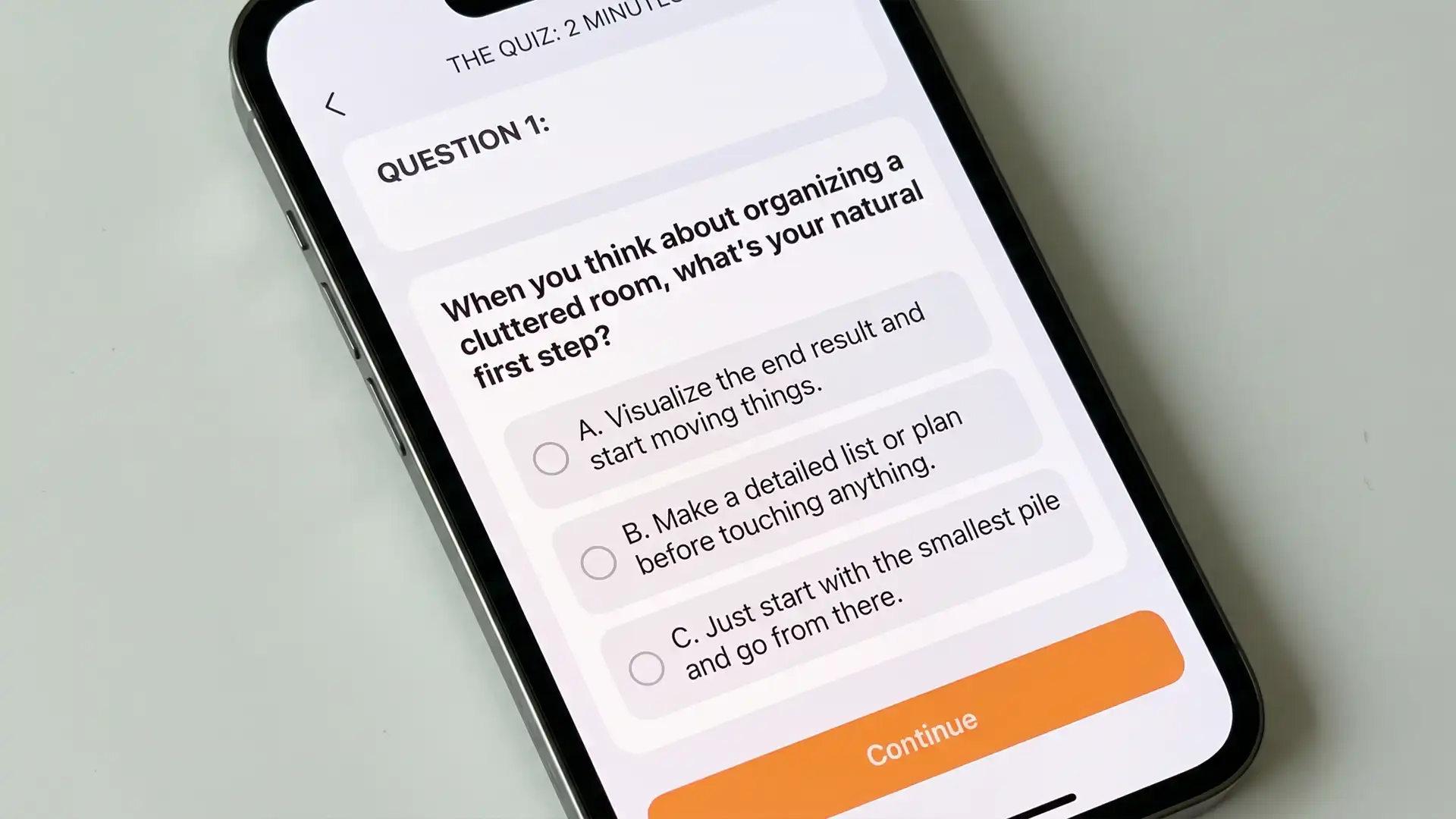
It Begins With A Free Quiz That Identifies Your Specific Neurodivergent Pattern - Because Not Every Brain Gets Stuck The Same Way
"The neurodivergent umbrella is wide," Dr. Hartley said. "ADHD and anxiety look completely different in the brain. Chronic overthinking produces a different kind of paralysis than attention fragmentation. Treating them with the same intervention produces the same failed results."
"The quiz exists because once you know your specific pattern - how your brain specifically gets stuck - the path through it becomes clear. And for the first time, you have something that was actually built for the way you work."
Here is what the quiz looks for:
- The Initiation-Blocked Brain You know exactly what needs doing. You want to do it. You cannot make yourself begin. The gap between intention and action feels physical - like a wall you can see through but can't cross. This is a dopamine signal deficit, not a willpower deficit.
- The Overthinker's Spiral You think about the task so thoroughly, for so long, that the thinking replaces the doing. By the time you've processed all the ways to start, the energy is gone. Your brain mistakes planning for progress. It needs to learn the difference.
- The Deadline Brain You function brilliantly under external pressure and are completely non-functional without it. You have produced exceptional work at 11pm before a deadline and done nothing for three weeks before that. The signal your brain needs is urgency - and we can teach it to generate that signal internally.
- The Interest Filter You can hyperfocus for six hours on something that interests you and cannot spend six minutes on something that doesn't - even if the second thing matters more. Your brain is not broken. It is extremely efficient at ignoring what it finds unrewarding. We work with that.
- The Anxiety Avoider The task feels fine until you approach it - then a wave of vague dread makes it suddenly too heavy to begin. The avoidance is not about the task. It's about the anxiety the task has accumulated. The two need to be separated before the task can be started.
- The Perfectionism Paralytic You can't start because starting means possibly doing it wrong. The standard is so high that not beginning feels safer than beginning imperfectly. The brain needs a different relationship with imperfect action - one built through very small, very low-stakes completions.
"Whatever your pattern," Dr. Hartley said, "you cannot fix what you haven't identified. Most people have spent their whole lives trying solutions designed for a different brain type entirely."
"Two minutes. The quiz finds your pattern. Then you get the first exercise - designed specifically for how your brain gets stuck. Not how a neurotypical brain gets stuck. Yours."
What I Tried With My Own Clients - And What Finally Changed Everything
"I want to tell you about one of my clients," Dr. Hartley said. "She came to me at 52. She had been told her whole life that she was intelligent but disorganized. Capable but unreliable. Full of potential but unable to follow through."
"She had tried every system. Every method. She had a drawer full of planners she'd used for exactly two weeks each. She had shame so deep about her home that she hadn't had anyone over in three years."
"She was diagnosed with ADHD at 49. The diagnosis explained everything and changed nothing - because understanding your brain and having the right tool for your brain are not the same thing."
"We started with the app. Her first task: touch one item she'd been avoiding. Just touch it. Not move it. Not deal with it. Touch it."
"She texted me that evening. 'I touched it. Then I moved it. Then I spent forty minutes on the room I'd kept closed for two years. I don't know what happened.'"
"What happened was initiation. The first three seconds. Everything after that was available to her - it had always been available. The door was just stuck. We found the right key."
She paused.
"Six weeks later her daughter visited and said something that made my client call me immediately."
"Her daughter had walked in, looked around, and said: 'Mum. You seem like yourself again.'"
That text is still on my phone.
"That is not a cleaning result," Dr. Hartley said. "That is a brain finally working with itself instead of against itself. That is what we are building. For every person who has spent decades being told the problem was their character - when the problem was always their signal."
Why Most People With Neurodivergent Brains Haven't Heard About This
The productivity industry is built for neurotypical brains. Its systems assume the presence of things neurodivergent brains structurally lack - consistent initiation signals, sustained motivation, reliable follow-through without external pressure.
When those systems fail, the person is blamed. Not the system.
SteadyMinds was not built for productivity. It was built for the brain that has everything except the signal to begin.
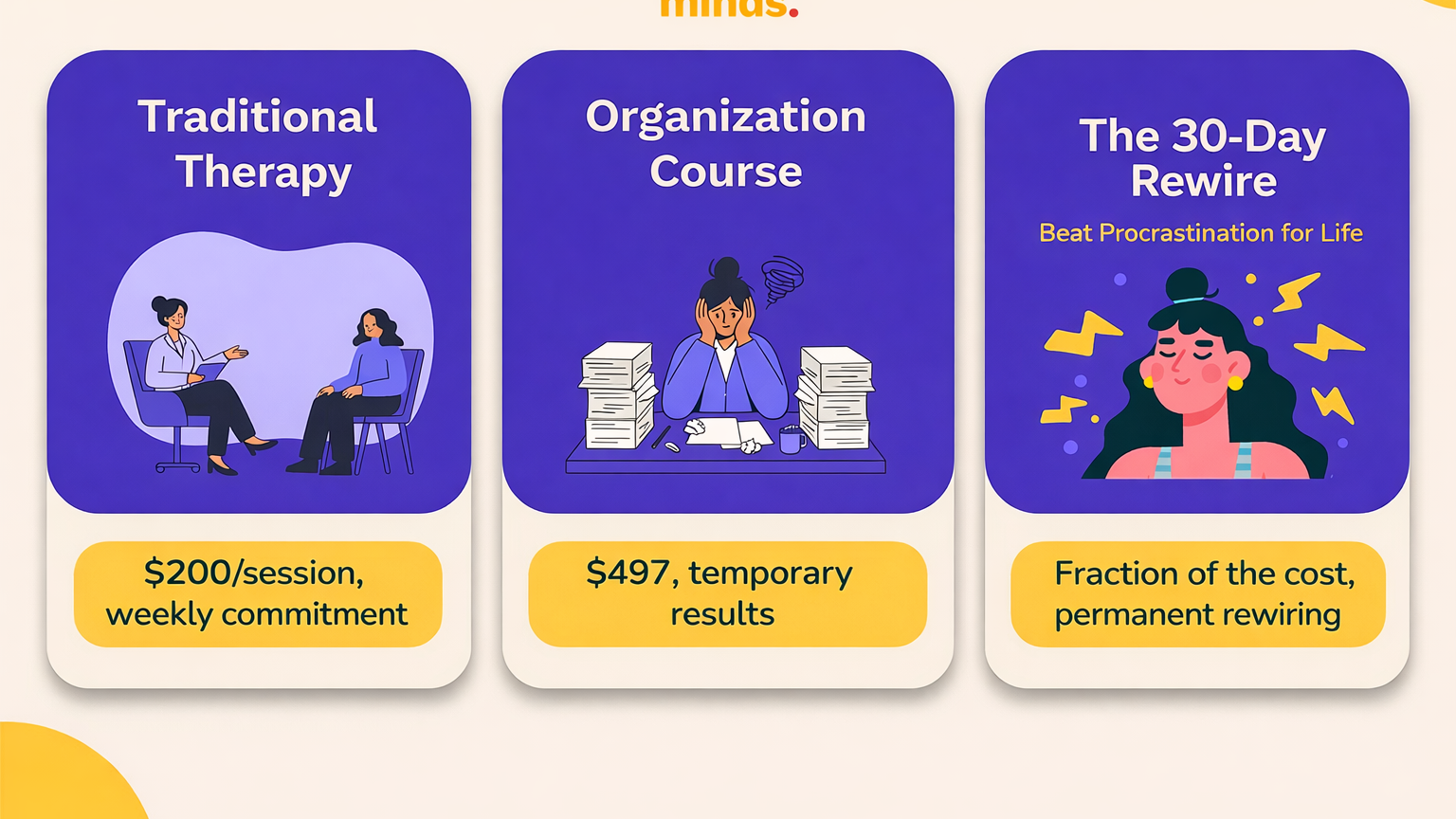
Traditional therapy: $200+ per session, waiting lists measured in months.
ADHD coaching: $400+ per session, rarely covered by insurance.
Productivity courses built for neurotypical users: $497, fail within two weeks.
SteadyMinds costs a fraction of those options. And unlike generic approaches that deepen shame when they fail, this was designed for exactly the brain you have.
Right now, enrollment is open. They limit new members to ensure everyone gets the personalized support this kind of work requires. Once they reach capacity, they close until the next window.
This 2-Minute Quiz Identifies Your Specific Brain Pattern - And Gives You Your First Exercise Immediately
Click the button below.
The quiz asks a few questions about how your brain specifically gets stuck - not how brains in general get stuck. Yours.
Then it identifies your pattern. And gives you the first exercise - designed for that exact pattern - immediately. No waiting. No generic plan.
(Most people tell me the quiz result alone is worth the two minutes. Finally having the right name for something they've been called wrong names for their whole life.)
5 minutes a day. That's it. Within 30 days, you'll be part of the 82% who are completely free of the paralysis that has followed them for years. No willpower required. No neurotypical system that wasn't built for you. Just the right signal, finally, for the right brain.